
Do Solar Panels Work in the Snow? – Leeds 2026
When winter rolls into Leeds and snow blankets the rooftops, it's natural to wonder: are my solar panels just sitting there doing nothing? For homeowners across the city who've invested in solar energy, those snowy mornings can raise questions about whether you're losing out on power generation.
Quick Take: Solar panels continue working throughout winter, and cold temperatures actually boost their efficiency. Whilst heavy snow temporarily halts production until it melts or slides off (which typically happens within hours), your system will keep generating electricity all winter long. Leeds sees around 9-10 days of snow annually, meaning brief interruptions rather than sustained problems. The real winter challenge isn't the cold or snow: it's simply fewer daylight hours. Your panels will keep powering your Leeds home year-round, just with reduced output during winter months.
Introduction: Winter Solar Power Across Leeds
Leeds winters bring shorter days and occasional snowfall that make some homeowners question their solar investment. With daylight dropping to around 7-8 hours during winter and energy generation falling to roughly 25% of summer levels, concerns are understandable. Here's what matters: panels need light, not warmth. Whilst winter output is lower, your system will still produce useful electricity on most winter days. Solar energy remains a practical, year-round solution even through Leeds' frosts and occasional snow.
How Solar Panels Work (In Simple Terms)
Solar panels generate electricity through what's called the photovoltaic effect. When sunlight hits a panel, energy from that light gets absorbed by photovoltaic cells, which causes electrical charges to shift and create current. This produces direct current (DC) electricity, which then flows through an inverter that converts it to alternating current (AC) for your home's use.
What's interesting is that panels respond to both direct sunshine and diffuse daylight. Even on overcast days, they're generating power, just at reduced levels. Light reaches the cells, electrons start moving, and electricity flows. This is why winter doesn't shut down your system. Panels aren't dependent on heat; they're dependent on light. Whether you're in Headingley or Roundhay, your panels are responding to whatever daylight makes it through.
How Snow Affects Solar Panel Performance
Snow impacts solar performance primarily through light obstruction. A light dusting usually causes minimal disruption: wind clears it, and enough light penetrates to maintain some generation. Heavy accumulation, however, blocks sunlight completely and stops production until it clears.
The moment snow begins sliding off or melting, those exposed areas immediately start generating again. Research indicates that annual energy losses from snow coverage are generally minor, most grid-connected systems experience only small percentage drops in yearly output. Each storm brings a temporary performance hit whilst panels are buried, but the impact on total annual production remains relatively small.
Panels remain inactive during heavy snowfall, but the instant even a portion becomes visible, generation resumes. For homes across Leeds, this translates to a few reduced-output days annually rather than a persistent issue.
Do Solar Panels Work When They're Covered in Snow?
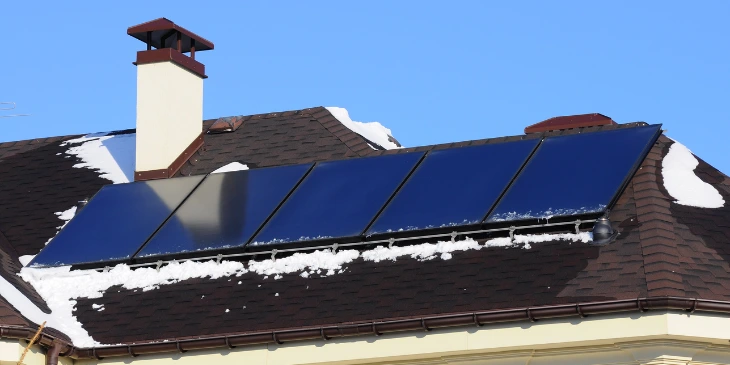
When solar panels are completely buried under snow, electricity production stops temporarily: thick coverage blocks all incoming light. That said, this situation rarely lasts long. Solar panels are engineered to shed snow efficiently. The combination of angled mounting and dark surfaces that absorb available heat means snow typically slides off shortly after snowfall ends.
Following most typical winter storms, snow either melts or slides off within 24 hours once sunshine returns. Even a thin layer isn't catastrophic: light can filter through powdery or sparse coverage. The good news is that solar arrays are largely self-clearing. The first rays of sunshine warm the panels, loosening snow that then slides off in sheets. Many Leeds homeowners find they never need to intervene: nature handles it within hours.
Contemporary systems automatically restart normal operation the moment any section of panel becomes exposed. Whether your installation is in Chapel Allerton or Horsforth, panels spring back to life immediately after snow clears, which typically happens naturally and quickly.
Cold Weather vs Solar Efficiency: A Winter Myth-Buster
There's a persistent myth that cold weather harms solar panel performance, but reality tells a different story. Solar panels actually operate more efficiently in cold temperatures: they convert sunlight to electricity more effectively when it's cold than when it's hot. High temperatures increase electrical resistance within solar cells, reducing output, whilst cold temperatures improve voltage and boost overall performance.
Both laboratory testing and field data confirm that panels produce more power per unit of sunlight on a frosty clear day compared to a hot summer afternoon. Panel efficiency starts declining once cell temperatures climb above roughly 25°C (77°F). During winter, panels frequently operate well below that point, meaning they're running at peak efficiency throughout those crisp cold mornings.
What does this mean for Leeds winters? The cold weather itself isn't holding back your solar panels. Reduced daylight hours and lower sun angles limit total energy production, but cold air actually helps panels operate more efficiently when sunshine is available. Engineers refer to this as a negative temperature coefficient: solar cell efficiency rises as temperature drops. The idea that "solar only works in hot climates" is simply wrong. Panels perform brilliantly in cold, sunny conditions.
The genuine winter challenges are shorter days and snow coverage, not low temperatures. As long as panels receive light, they'll generate electricity, and they'll do it more efficiently on a January morning than during July's heat.
Snowfall in Leeds and the UK: What Homeowners Can Expect
How much snow does Leeds actually receive? Compared to other UK cities, Leeds experiences moderate winter weather without extremes. Met Office records show Leeds averaging roughly 9-10 days of snowfall annually, placing it among the snowier major UK cities. However, these are days with some snowfall, often just light flurries. In terms of actual accumulation, Leeds typically sees only a few centimetres per year.
Significant winter weather events remain relatively uncommon across Yorkshire. When they do occur, snow usually melts within days thanks to the UK's maritime climate. Extended coverage on rooftops is rare except during unusual cold snaps. Practically speaking, your solar panels in Leeds will spend the vast majority of winter exposed and generating whenever there's daylight. Only during those handful of snowy days might they be temporarily covered.
Winter-related downtime typically amounts to just a few days annually. UK homeowners operate successful solar systems despite winter weather, as our precipitation remains modest compared to many other regions. With professional installation, Leeds' climate presents no serious barrier to solar energy. Whether you're in the city centre or South Leeds, winter weather is an occasional visitor rather than a constant problem.
Can Snow Ever Help Solar?
It might seem counterintuitive, but winter snow can actually benefit solar panels. Fresh white snow acts as a reflective surface, bouncing additional sunlight onto your panels. This albedo effect can increase energy output on clear days following snowfall. Once panels are clear, bright sunshine reflecting off surrounding snow can boost production beyond normal levels.
Snow also provides a cleaning service. As it melts and slides down the array, it carries away accumulated dirt and debris from the glass surface. This self-cleaning property can leave panels more efficient after a storm, because clean glass converts light to electricity more effectively than dirty glass.
Additionally, snowy periods often precede clear, bright skies: perfect conditions for solar generation. Between the reflective boost, natural cleaning, and cold-temperature efficiency, a sunny day following snow can help recover the energy you missed during coverage. If you've installed solar battery storage, these high-output days become even more valuable.

Are Solar Panels Safe in Snow and Ice?
Will winter conditions damage your solar panels or compromise your roof? Solar panels are built to be remarkably durable. They're constructed with tempered glass and robust frames designed to withstand substantial weight and impact. All certified panels undergo rigorous pressure testing.
A standard solar module is rated for approximately 2,400 Pascals of pressure, which translates to roughly 50 pounds per square foot. Many modern panels carry even higher ratings at 5,000 Pa, about 100 lb/ft². Provided your installer selected appropriate modules for UK conditions, your roof and panels can easily handle typical Leeds snowfall.
For Leeds' typical accumulation (rarely exceeding a foot), solar panels are perfectly safe. Regarding hail, modules feature impact-resistant tempered glass designed to withstand golf-ball-sized hail at high velocity. It's exceptionally rare for UK hail to cause panel damage.
One consideration is snow sliding. Panels have a smooth surface, and when snow releases, it can slide off in large sheets. Snow guards aren't commonly needed in Leeds' moderate climate, but they're worth considering if you've got a steep roof pitch over doorways.
Solar panels are engineered to handle winter: the equipment is weatherproof and robust. Provided your system meets installation standards, you shouldn't worry about damage. If you're considering solar maintenance or repair, winter-related damage is exceptionally uncommon when systems are properly installed.
Winter Maintenance Tips for Solar Panels
Solar panels require minimal maintenance through winter. The best approach is patience: let nature do the work rather than attempting to clear panels yourself. Industry professionals strongly advise against climbing onto your roof or scraping panels. It's dangerous, and you risk scratching the glass and voiding your warranty.
In most situations, snow slides off naturally once sunshine returns. Panels typically clear faster than surrounding surfaces, they're dark and angled, which encourages melting. Often, within hours or a day, your panels will be generating normally again.
If you feel compelled to remove snow, do so safely from ground level. Use a soft-bristled rake with a plastic head and extension pole. Gently pull snow downward off the panel surface. Avoid metal tools or hard shovels. Never pour hot water onto cold panels, the rapid temperature change could crack the glass.
Monitor your system output through your inverter app: this shows if panels are covered, saving you from visually checking the roof in harsh weather. Don't stress about brief production losses. Solar systems are designed to produce ample energy across the entire year. Missing a day or two during a storm has negligible impact. For specific guidance, you can always contact local solar experts who understand Leeds' climate.
Conclusion: Leading the Way Through Winter
Solar panels aren't just a fair-weather solution: they're a year-round energy system built for Leeds' real climate. Whilst winter brings shorter days and occasional snow, your panels keep working throughout the season, generating electricity whenever daylight is available. The cold actually helps them run more efficiently, and snow coverage is both brief and rare.
The transformation to clean energy doesn't pause for winter. Thousands of Loiners are already leading the way with solar, proving that Yorkshire's climate is perfectly suited to this technology. If you're ready to take the lead on your energy independence, visit our solar blog for more insights, or reach out to start your solar transformation today.
Solar and Snow FAQs
Do solar panels still generate electricity during winter months?
Absolutely. Solar panels operate whenever there's light available. They don't require heat, just daylight. Winter sees reduced overall energy production due to shorter days and lower sun angles, but panels keep working throughout. Cold temperatures actually boost panel efficiency. Whilst output is considerably lower than summer, your system will still produce useful electricity all winter long.
What happens if my solar panels are covered in snow?
When panels are fully covered, they temporarily stop generating power. However, this situation is usually brief. Snow tends to slide off independently once sunshine warms the panels. Even partial clearing is sufficient to restart generation. Typically, within a day of snowfall ending, most snow will have cleared from a properly angled panel. Panels automatically resume normal operation as soon as any portion becomes exposed.
Should I remove snow from my solar panels?
Generally speaking, no. The recommended practice is letting it melt or slide off naturally. Attempting to scrape snow off poses safety risks: you could slip and fall, or damage the panels. Many manufacturer warranties specifically advise against homeowner removal. If you choose to remove snow, do it safely: use a soft rake with a long pole whilst remaining on the ground. Never use metal implements or hot water. In Leeds' climate, manual clearing is rarely necessary.
Can snow or ice damage my solar panels?
Solar panels are engineered to withstand winter weather. They're built with substantial load ratings, many are rated for 5,000 Pa or higher, equivalent to several feet of snow. Panels feature tempered glass which is extremely tough; they routinely survive hail storms without damage. Provided your system was installed to code, your roof and panels should handle winter conditions safely.
Will my panels still produce enough energy to be worthwhile in winter?
Yes. Solar systems are sized for annual usage, accounting for summer over-production and winter under-production. In the UK, a 4 kW system might generate 25-30% of its summer output during winter months. Spring and summer compensate for winter's shortfall. Across a full year, you receive the expected kWh. If you're grid-connected with export payments, credits from sunnier months help offset winter usage. Countries with far harsher winters operate millions of successful solar installations. For more information about how we help Leeds lead the way.
Do I need to do anything special to prepare my solar panels for winter?
Generally, no special preparation is required. If your system was professionally installed, it's already configured for local conditions. A few sensible practices: trim overhanging branches; ensure panels are mounted at an appropriate tilt angle (most in Leeds are 30-40°); and perhaps have your installer perform a pre-winter inspection. In Leeds, simply entering winter with clean panels and a functioning monitoring system is sufficient. Whether you're in East Leeds or West Leeds, your panels are built to handle Yorkshire winters.