Can You Solar Power Sheds in Leeds?
Got a shed sitting at the bottom of your garden that could be doing a lot more? Whether it's a weekend workshop, a home office that gets you away from the kitchen table, or just a storage space where a reliable light would make all the difference, solar might be closer to a practical answer than you think.
Quick take: Yes, you can solar power sheds in Leeds. From basic lighting and device charging through to a fully equipped home office, the right system comes down to your energy needs, how much roof space you have, and how the setup connects to your property. Planning permission usually isn't required, but the electrical work must meet UK regulations. Here's what you need to know before you get started.
Table of Contents:
What Can You Run on Solar Power in a Shed?
How Many Solar Panels Do You Need for a Shed?
Do You Need a Battery for Shed Solar Panels?
What Type of Solar Panel System Is Best for a Shed in Leeds?
How Much Does It Cost to Solar Power a Shed?
Can You Solar Power a Shed?
Absolutely, and it's more practical than most people expect. Solar panels generate electricity from daylight, not just direct sunshine, which means that even during the overcast, drizzly spells that are very much part of life beneath the Pennines, they carry on producing. As long as usable light reaches the roof, the structure can take the weight of mounting hardware, and shading is manageable, your shed is a perfectly viable host for a solar system.
South-facing roofs deliver the strongest output, but east and west-facing options still generate usable electricity across the day. Shade from nearby trees, fences, or neighbouring properties reduces output and needs honest assessment from the outset rather than being treated as a detail to sort out later.
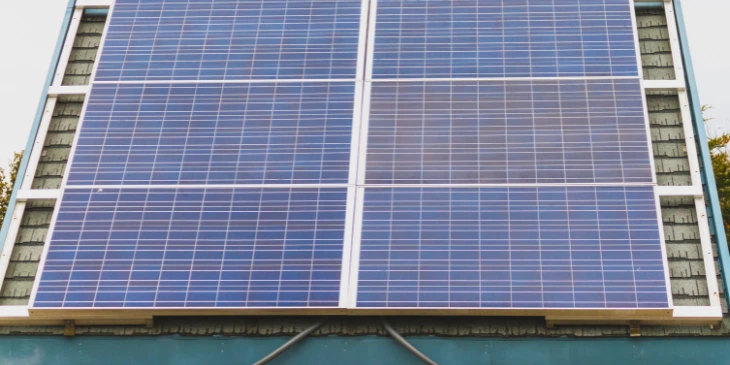
Two things are worth sorting before anything else. The first is planning. Solar panels on residential property in England are generally classed as permitted development, which means most homeowners won't need to submit an application at all. Listed buildings and conservation areas are exceptions, so if you're in any doubt, a quick check with Leeds City Council is the sensible move.
The second is electrical safety. Electrical work in garden sheds and garages, including solar PV, falls under Part P regulations in the UK. All wiring and connection work must be carried out by a registered, competent electrician. The physical side of mounting panels might look like a weekend job, but the regulated electrical work isn't something to approach casually. If your shed doesn't currently have its own electricity supply, build that into your design and budget from the start.
What Can You Run on Solar Power in a Shed?
The answer depends almost entirely on what the space is actually used for. Every appliance draws a certain number of watts. Multiply that by how many hours a day you run it and you get your energy use in watt-hours. The smaller that total, the more realistic a compact setup becomes.
Lights, device chargers, laptops, Wi-Fi routers, and CCTV cameras all sit comfortably within what a small system can handle. Mini fridges are possible, but they run continuously and need careful sizing to make sure the panels and battery can keep up. The moment you introduce a space heater, kettle, or heavy power tools, the demand climbs steeply and a compact shed setup simply won't cover it.
How Many Solar Panels Do You Need for a Shed?
There's no fixed answer that works for every shed. Panel count depends on four things: your daily energy use, the usable roof area you have available, which direction the roof faces, and how much shading affects output throughout the day.
For context, a typical UK domestic installation sits at around 3.5 kWp, using roughly six to twelve panels across 10 to 20 square metres of roof. Shed projects work on a far smaller scale than that. A setup running lights and a couple of devices might only need one to three panels. A home office with a monitor, laptop, and router running most of the working day will push that number higher.
Roof angle is worth thinking about too. A shallow pitch or a roof that runs east to west rather than north to south changes what you can realistically expect from the system, and is another reason a site visit matters more than estimates on paper.
For many Leeds properties, available roof space becomes the real constraint before energy demand does. A compact shed roof in Headingley or Horsforth doesn't leave a lot of room for flexibility. Start by working out your daily energy needs, then see how much roof you're actually working with. Our vetted installers can take it from there and size everything properly. Get in touch to arrange a quote.
Do You Need a Battery for Shed Solar Panels?
Not necessarily. It comes down to when you use the space and how the system connects to your property.
If the system ties into your main property's grid supply, the grid covers you whenever the panels aren't generating enough. A battery in that setup is optional rather than essential. You'll draw on solar during the day and fall back on grid power in the evenings or on the kind of flat, grey days Leeds sees plenty of in winter.
For an off-grid setup, the picture changes. Without a grid connection, a battery and charge controller are what allow the system to store energy during the day for use later. Without storage, you're limited to using the shed during daylight hours only.
It's a financial decision as well as a practical one. A battery adds to the upfront cost, and if your shed is only ever used during the day, the case for one is fairly weak. If you want evening use, or you'd prefer the space to run independently from the grid, storage makes the whole thing far more practical. Adding a battery at the time of installation is generally more cost-effective than retrofitting one later. Our solar battery storage page goes into the options in more detail.
What Type of Solar Panel System Is Best for a Shed in Leeds?
There are three system types worth considering. The right one depends on your use case, not just the size of the setup.
An off-grid system is the most self-contained option. A battery and charge controller store what the panels generate during the day for use whenever you need it. It's the natural choice when running a cable from the main property isn't practical.
A grid-connected system links to your property's existing mains supply, with the grid covering any shortfall. It's the most straightforward option for outbuildings already wired up, and it opens the door to Smart Export Guarantee payments if the system meets eligibility criteria.
A hybrid setup brings both together. Power during the day, stored energy for the evening, and the grid as a fallback. It's the most flexible of the three, though it carries the highest upfront cost and the most compliance steps to work through.
All three types require Part P-compliant electrical work. Grid-connected and hybrid setups also need to be registered with Northern Powergrid, the Distribution Network Operator for Leeds and much of Yorkshire. Our local installers handle all of this whether you're in Roundhay, Beeston, Kirkstall, or Meanwood.
How Much Does It Cost to Solar Power a Shed?
Costs vary depending on the system type and how involved the installation turns out to be.
A standard domestic solar installation in the UK typically runs at around £6,000 to £7,500 for a 3.5 kWp system. Shed projects don't scale down at the same rate. Labour, mounting hardware, and wiring all carry base costs that don't shrink in proportion to panel count. A small off-grid kit costs considerably less than a fully installed, grid-connected array on a larger outbuilding, but even modest projects carry those fixed costs.
Battery storage is a separate cost. Adding a battery to an installation in the UK typically falls somewhere between £5,000 and £8,000 depending on capacity and type. For a smaller shed project, that figure can match or exceed the cost of the panels themselves, so it's worth being clear about whether you genuinely need it before committing.
Two things work in your favour here. Solar installations and battery storage are currently zero-rated for VAT in the UK, a policy that runs until March 2027. And if your system is grid-connected and MCS-certified, Smart Export Guarantee payments can improve the long-term returns.
For a quote built around your specific shed and property, our accredited installers serve Leeds from Armley and Garforth to Morley, Seacroft, and Bramley. Take a look at our area pages for North Leeds, South Leeds, East Leeds, West Leeds, and Leeds City Centre to find out more about coverage in your area.
Final Thoughts on Solar Panels for Your Shed
Solar panels on a Leeds shed are entirely achievable, but the right approach always starts with an honest look at what the space actually needs.
For lighter loads like lighting, device charging, and basic electronics, a compact setup is a practical and cost-effective project. For heating, cooking, heavy tools, or grid export, you're looking at a more involved installation with a larger budget and more compliance steps to get through.
Start with your energy needs. Check your roof space. Then get a qualified local installer in to give you a clear picture before you spend anything.
Solar Panels Leeds connects homeowners and businesses across the city with vetted local installers, from Chapel Allerton to Hunslet. Get in touch and we'll connect you with the right installer for your shed. Once your system is running, our solar maintenance and repair service is there when you need it. Browse more guides like this on our solar blog.
Solar Power for Your Shed FAQs
Do solar panels still work on cloudy days in Leeds?
Yes. Panels generate electricity from daylight, not direct sunshine. Output drops on duller days, but they carry on producing. Leeds gets enough usable daylight year-round to make it worthwhile, even through a typical Pennine winter.
Do I need planning permission for solar panels on my shed?
Usually not. Solar panels on residential property in England are classed as permitted development in most cases, so no application is needed. Exceptions apply to listed buildings and conservation areas. If you're unsure, a quick check with Leeds City Council will settle it.
Can a small shed system run a heater or kettle?
Not typically. Space heaters and kettles each draw around 1,500 watts, which is well beyond what a compact system is sized to handle. These setups work best for lights, chargers, routers, and other low-draw appliances.
Can I power my shed without a battery?
Yes, in some cases. If the system connects to your main grid supply, the grid covers you when generation is low. A shed that's only used during daylight hours doesn't always need storage.
Can I earn money from shed-mounted solar panels?
Potentially. If the system is grid-connected and meets Smart Export Guarantee requirements, you can receive payments for electricity exported to the grid. A purely off-grid setup with no export won't qualify.