Are Parapet Walls a Hindrance to Solar? - Leeds
Got a flat roof in Leeds? There's a good chance it's ringed by parapet walls. Whether you're in a converted mill building in Holbeck, a commercial unit in Beeston, or a flat-roofed Victorian property in Chapeltown, those low perimeter walls are common across the city. If you're thinking about going solar, wondering whether they'll cause problems is a fair question.
Quick take: Parapet walls can create shading challenges and limit where panels can sit, but they're not a reason to write off solar. They also offer real benefits: wind protection, improved roof safety, and help keeping your installation within permitted development rules. Get the positioning right, choose the correct mounting setup, and use modern shading technology, and a flat roof in Leeds with parapet walls is a perfectly viable candidate for solar.
Table of Contents
What Are Parapet Walls and Why They Matter for Solar
Can You Install Solar Panels on or Near Parapet Walls in Leeds?
Key Design Considerations for Solar on Flat Roofs With Parapet Walls
How Parapet Walls Affect Shading, Panel Tilt, and Energy Output
Mounting Options and Structural Requirements for Solar on Parapet Walls
Cost, Maintenance, and Safety Considerations in Leeds
What Are Parapet Walls and Why They Matter for Solar
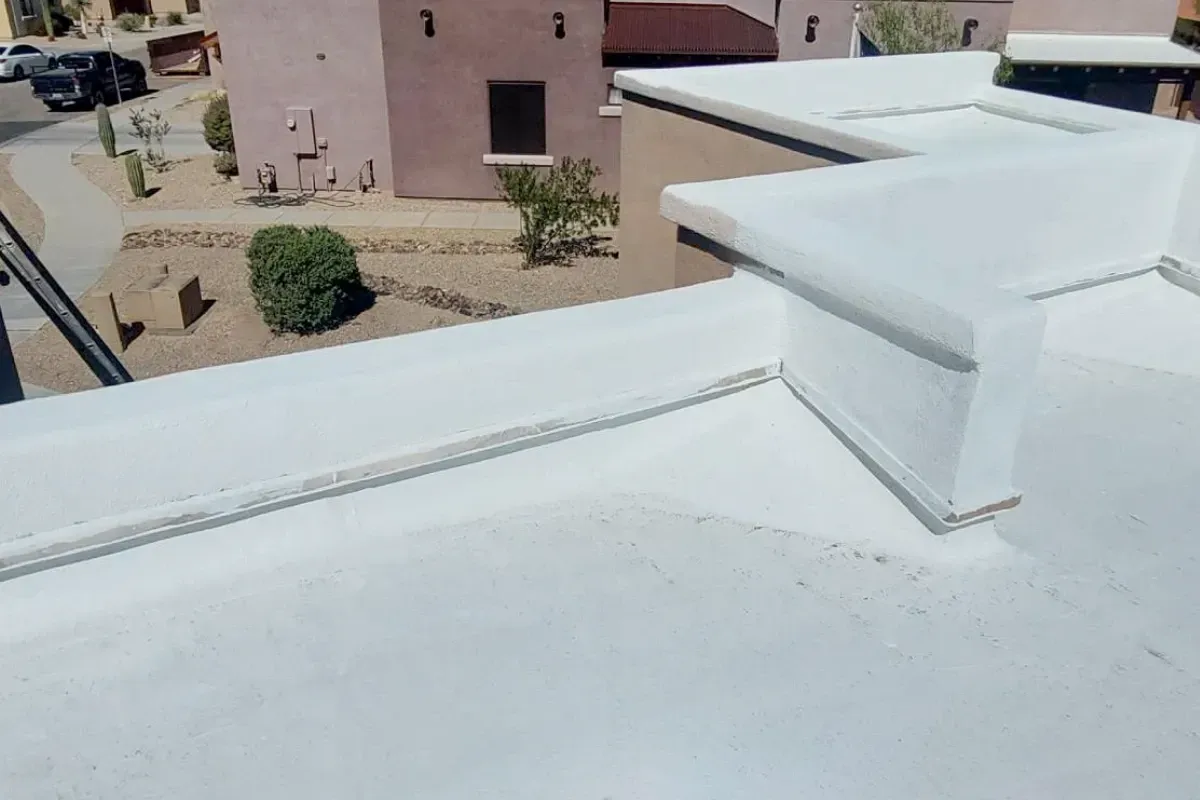
A parapet wall is the low, vertical wall running along the edge of a flat roof, terrace, or balcony. You'll find them on Victorian terraces in Headingley, industrial conversions in Kirkstall, and commercial buildings across the city centre. They prevent falls, assist drainage, provide fire separation between adjoining properties, and conceal rooftop equipment from street level.
When it comes to solar, they cut both ways. On the plus side, they act as a windbreak at the roof's edge, reducing the uplift forces that make securing panels trickier. On the downside, they cast shadows. Even a modest wall can block sunlight from nearby panels, particularly in the mornings, late afternoons, and through winter when the sun sits low. According to this roofing guide, parapets affect everything from drainage to safety to how rooftop equipment is concealed.
In short, they matter for solar because they directly shape panel placement, mounting choices, shading patterns, wind loading, and planning compliance.
Can You Install Solar Panels on or Near Parapet Walls in Leeds?
Yes, absolutely. Properties across North Leeds, South Leeds, East Leeds, and West Leeds with flat roofs and parapet walls are fitted with panels regularly, and the results are often excellent.
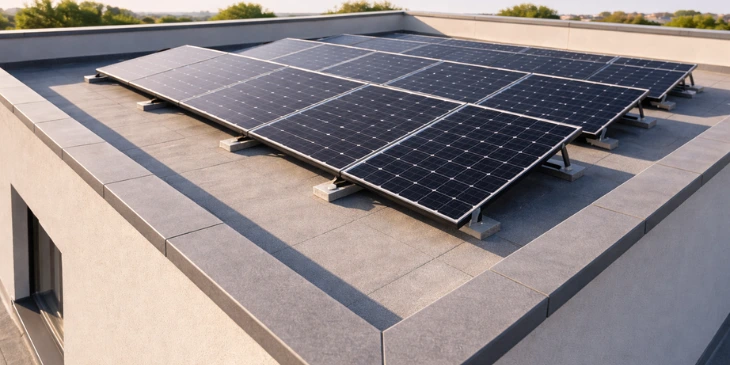
The most practical approach is mounting panels on the roof surface with enough setback from the walls to keep them clear of the shadow line. The rule of thumb is 1.5 to 2 times the wall's height. If your parapet stands 1 metre tall, panels should sit at least 1.5 to 2 metres back.
There's also the option of spanning aluminium beam systems from one parapet to the other, with panels resting on top. This transfers load into the walls and building structure rather than the roof deck. That said, parapet walls weren't built to carry solar arrays, so a structural engineer must confirm they can handle the additional forces before anything is installed.
One thing to avoid: bolting racking through the roof surface without proper waterproofing. As this installation guide explains, doing so risks leaks and often falls outside building regulations. Always use approved methods and make sure any penetrations are properly sealed.
Key Design Considerations for Solar on Flat Roofs With Parapet Walls
Shading and spacing. Parapet walls cast shadows, most noticeably when the sun is low. Keep panels at least 1.5 to 2 times the wall height back, and allow roughly 1 metre between panel rows to prevent row-on-row shading.
Tilt angle. A tilt of 5 to 15 degrees is standard for flat roof systems, balancing energy yield and wind resistance. Zero degrees causes dirt to pool on the surface; steeper angles increase wind uplift and row spacing requirements. The flat roof gives you the freedom to orient panels due south for maximum output, or use an east-west layout to spread generation more evenly across the day.
Wind loads. A parapet of around 3 feet or more reduces edge uplift on the array, but it's not a substitute for proper wind load calculations. Always follow the racking manufacturer's guidance for your site.
Structural capacity. Ballasted systems can add 20 to 30 kg per square metre from concrete blocks alone. On older Leeds properties, a structural engineer should verify roof load capacity before anything goes up.
Waterproofing and access. Go fully ballasted wherever possible to avoid penetrating the roof membrane. When penetrations are unavoidable, flash and seal them thoroughly. Parapet roofs rely on internal drains or scuppers, and those must stay unblocked. For commercial properties in Leeds city centre with busy rooftops, careful layout planning from the outset pays dividends.
How Parapet Walls Affect Shading, Panel Tilt, and Energy Output
Shading is the primary concern. Even one shaded cell out of 36 can cause output to drop by as much as 75% in systems without panel-level optimisers, because shaded cells restrict current flow across the whole string.
In Leeds, this bites hardest in winter. At our latitude, the sun sits low from October through March, and a south-facing parapet wall can throw a long shadow across the roof on a December afternoon. A 1 metre high wall could shade the first couple of metres of roof entirely at that time of year. Shading research shows that a 1 metre high perimeter wall typically requires the area directly behind it to be treated as shaded for planning purposes.
When some shading is unavoidable, modern technology limits the damage. Solar optimisers let each panel operate independently, so a shaded panel won't drag down the rest of the string. Grouping panels nearest the wall into separate strings from those further in also helps contain losses.
Panels mounted vertically on the wall face produce around 15 to 25% less annual energy than optimally tilted panels. For most Leeds installations, keeping panels on the roof surface and using the wall as a windbreak is the smarter call.
Mounting Options and Structural Requirements for Solar on Parapet Walls
Ballasted mounting is the most common choice for flat roofs with parapet walls. Panels sit on racking weighted down by concrete blocks, avoiding roof penetrations entirely. Because the wall reduces wind exposure, less ballast is typically needed. Confirm the roof can handle the added weight before going ahead.
Mechanical (attached) mounting involves anchoring racking directly into the roof structure. This is the route when parapets are low or wind exposure is high. According to this flat roof overview, attached panelling is preferred where there are no perimeter walls to reduce wind speed. All penetrations must be flashed and sealed.
Parapet-bridging beam systems span aluminium beams between opposing parapets, lifting panels above the roof surface with no weight on the membrane below. Useful for narrower Leeds properties where roof space is limited, but structural sign-off is non-negotiable.
Vertical parapet mounts fix panels directly to the wall face. Output is 15 to 25% lower, and studies show panels mounted this way can increase wind stress on the wall by up to 40%. Engineering assessment is essential. This is a niche option at best.
Across all methods: use slip sheets under rack feet, flash any penetrations properly, and don't compromise the wall's coping cap. For a full assessment of your roof, get in touch with the Solar Panels Leeds team.
Cost, Maintenance, and Safety Considerations in Leeds
Cost. Flat roof solar in Leeds costs slightly more than a pitched roof installation, mainly due to mounting hardware. For a 4 kW system without battery storage, expect roughly £6,000 to £7,000, or around £1,250 to £1,500 per kW. Labour on a flat roof is often quicker than on a pitched roof, which partially offsets those extra material costs. Our battery storage page covers how the Smart Export Guarantee (SEG) can help recoup costs through surplus energy export.
Maintenance. Flat roof panels are easier to access than those on a pitched roof. The trade-off is that low-tilt panels gather more dirt, so cleaning matters more. Once or twice a year is enough for most Leeds properties. Professional annual servicing runs between £100 and £300, covering cleaning, wiring checks, and a performance review. Keep roof drains clear around panel supports. Our maintenance service covers the whole of Leeds and handles flat roof systems as standard.
Safety and planning. Most residential flat roof installations across Leeds fall under permitted development. Panels must not protrude more than 60 cm above the roof's highest point and should maintain a 0.5 to 1 metre setback from the edge. Parapet walls help here. Panels sitting below the wall line are hidden from street level, which keeps you well within permitted development boundaries. Exceptions apply for listed buildings and conservation areas. Leeds has a fair number of both, so check with Leeds City Council if your property might be affected. A wall of around 1 metre or more also functions as a guardrail equivalent under UK work-at-height regulations, making maintenance safer. Some older Leeds terraces have parapets of only 20 to 30 cm, which offer no meaningful fall protection and should be flagged to your installer upfront.
Final Thoughts on Parapet Walls and Solar in Leeds
Parapet walls are not a dealbreaker for solar on a Leeds flat roof. Yes, they shade panels if the layout isn't right, and yes, you'll need to respect setback distances. But they also protect your array from wind, make the roof a safer working environment, and genuinely help with planning compliance. That's a trade-off worth understanding, not avoiding.
The installations that perform best are those where the installer has carried out a proper shade analysis, matched the layout to the specific parapet height and roof dimensions, and chosen the right mounting system. The wall height on a back-to-back terrace in Beeston is a different proposition to a commercial building in Leeds city centre, and the design should reflect that.
Modern microinverters and power optimisers have closed the performance gap that parapet shading used to cause. Combined with smart string design and sensible setbacks, flat roof systems with parapet walls perform much closer to a perfectly-oriented pitched roof than most people expect.
If you're looking at solar for a property in North Leeds, South Leeds, or anywhere else across the city, the Solar Panels Leeds team will take a proper look at what your roof can do. Browse our solar blog for more guides like this, or get in touch and let's get started.
Solar for Parapet Walls in Leeds FAQs
Can solar panels be mounted on the parapet wall itself, or only on the roof?
It's possible but rarely the right call. Most installations use racking on the flat roof surface rather than vertical mounts on the wall face. Vertically mounted panels produce around 15 to 25% less energy than optimally tilted panels, and studies show they can increase wind stress on the wall by up to 40%. For most Leeds properties, keeping panels on the roof and using the wall as a windbreak is the better approach.
How far back from a parapet wall should panels be installed to avoid shading?
The rule of thumb is 1.5 to 2 times the wall's height. For a 1 metre high parapet, that's a minimum setback of 1.5 to 2 metres. At Leeds' latitude, winter sun angles are low and shadows from south-facing walls can stretch further than you'd expect in December. Some designers use 3 times the wall height to be safe. The most reliable approach is a shade analysis from your installer, who can model exactly where sunlight falls throughout the year.
Do parapet walls significantly reduce energy output?
They can, if the design doesn't account for them. Shading one cell out of 36 can cut a panel's output by up to 75% without panel-level optimisers. Modern microinverters and power optimisers largely resolve this by letting each panel work independently. A well-designed system keeps panels clear of parapet shading during peak sun hours, and smart string grouping handles the rest.
Do parapet walls help with wind and storm protection for solar panels?
Yes. They act as a windbreak at the roof edge, disrupting the airflow that would otherwise create uplift forces under the array. Where a parapet reaches around 3 feet or more, wind uplift near the roof edge is reduced, meaning ballasted systems need less weight to stay put. They don't eliminate wind forces entirely, so the array still needs to be engineered for your site's specific conditions.
What's the best mounting system for a flat roof with parapet walls in Leeds?
A ballasted racking system is usually the best starting point. The wall reduces wind exposure at the edges, so lighter ballast blocks can hold the array without roof penetrations. For lower walls or exposed sites, adding a few mechanical fixings gives extra security. Where roof load capacity is tight, a parapet-bridging beam system transfers load into the building walls instead. The Solar Panels Leeds team can advise on the right option after assessing your roof.
Is planning permission needed for flat roof solar in Leeds?
Usually not. Flat roof solar falls under permitted development as long as panels don't protrude more than 60 cm above the roof's highest point and maintain a 0.5 to 1 metre setback from the edge. Listed buildings and conservation areas are the main exceptions, and Leeds has several. Check with Leeds City Council if your property might be affected. Parapet walls work in your favour: panels sitting below the wall line are invisible from street level, keeping you well within permitted development rules.
How much maintenance do flat roof panels need in Leeds?
More than pitched roof panels, because the lower tilt means dirt accumulates faster. Once or twice a year is sufficient for most Leeds properties. Professional servicing runs around £100 to £300 annually, covering cleaning, wiring checks, and a performance review. Keep roof gutters and drains clear, and have the system inspected each year. Our maintenance team covers the whole of Leeds for flat roof systems and ongoing servicing.