Solar Panel Orientation Comparison - Leeds
Thinking about solar panels for your Leeds home but not sure which way they should face? Panel orientation genuinely affects how much energy you generate and money you save. The good news? While south-facing panels are the gold standard in the UK, producing the most electricity year-round, they're far from your only option. East, west, and even north-facing systems can still deliver solid results with the right approach.
Quick take: South-facing panels generate the most energy in Leeds, capturing sunlight throughout the day. East and west orientations produce around 80-85% of south-facing output, making them excellent alternatives. North-facing panels are trickier but not impossible. The best direction for you depends on your roof layout, energy usage patterns, and local shading, not just the compass.
Table of Contents
How Roof Orientation Affects Solar Panels
Understanding Solar Panel Orientations (South, East/West and North)
South-Facing Solar: The Gold Standard
East- and West-Facing Solar: Underrated All-Rounders
North-Facing Solar: When (and When Not) It Makes Sense
Other Factors That Matter as Much as Orientation
What's Best for You? A Simple Decision Guide
Government and Local Incentives
How Roof Orientation Affects Solar Panels
Solar panels work by absorbing sunlight and converting it into electricity, so the direction they face makes a real difference to performance. In the UK, we're in the northern hemisphere, which means the sun travels across the southern half of the sky throughout the day. This is why panels facing south get the longest, most direct exposure and typically generate the most electricity.
But orientation isn't everything. Panels on east or west roofs still produce substantial energy, typically around 80-85% of what you'd get from a south setup. Even the timing matters. East-facing panels produce more in the morning, west-facing ones ramp up in the afternoon, and south-facing panels deliver steady output all day. In Leeds, where we get around 1,400 hours of sunshine annually, optimizing your panel direction helps you capture every bit of available light and lead the way in energy independence.
Understanding Solar Panel Orientations (South, East/West and North)
South solar panels point directly toward the path the sun takes across our sky. Because the sun is always to the south at midday in the UK, these panels soak up sunlight from morning through to evening. A 4 kW system on a south-facing Leeds roof might generate around 3,700-3,800 kWh per year, enough to cover a significant chunk of a typical home's electricity needs.
East solar panels and west solar panels capture the sun during different parts of the day. East-facing panels get strong morning sunlight, producing most of their energy before midday. West-facing panels generate power from late morning through sunset. Both orientations typically produce about 15-20% less than south-facing panels over the year, but that's still a solid 80-85% of optimal output. The real advantage? They often match when people actually use electricity: mornings getting ready for work, and evenings when the family's home.
North solar panels are the trickiest option in the UK. Since the sun's path is predominantly southern, a roof facing north receives mostly indirect and diffuse light. These panels might only produce 50-70% of what an identical south-facing system would generate. That's a significant drop, but it doesn't mean north roofs are completely off limits.
South-Facing Solar: The Gold Standard
There's a reason installers get excited about south-facing roofs: they simply deliver the best performance. A south solar panel system will typically outperform any other orientation by a clear margin. Where an east or west array might generate around 3,000-3,300 kWh annually from a 4 kW system, that same setup facing south could produce 3,700-3,800 kWh: several hundred extra kilowatt-hours each year.
South-facing panels deliver a smooth, consistent power curve throughout the day. They start generating as soon as there's decent morning light, ramp up to peak production around midday when the sun is highest, and continue producing well into the afternoon. Winter performance is another area where south-facing panels shine. When days are short and the sun stays low in the sky, south-facing panels are positioned to capture those limited hours more effectively than any other orientation. From a financial perspective, south-facing installations typically offer the fastest payback periods, around 7-9 years in Leeds.
East- and West-Facing Solar: Underrated All-Rounders
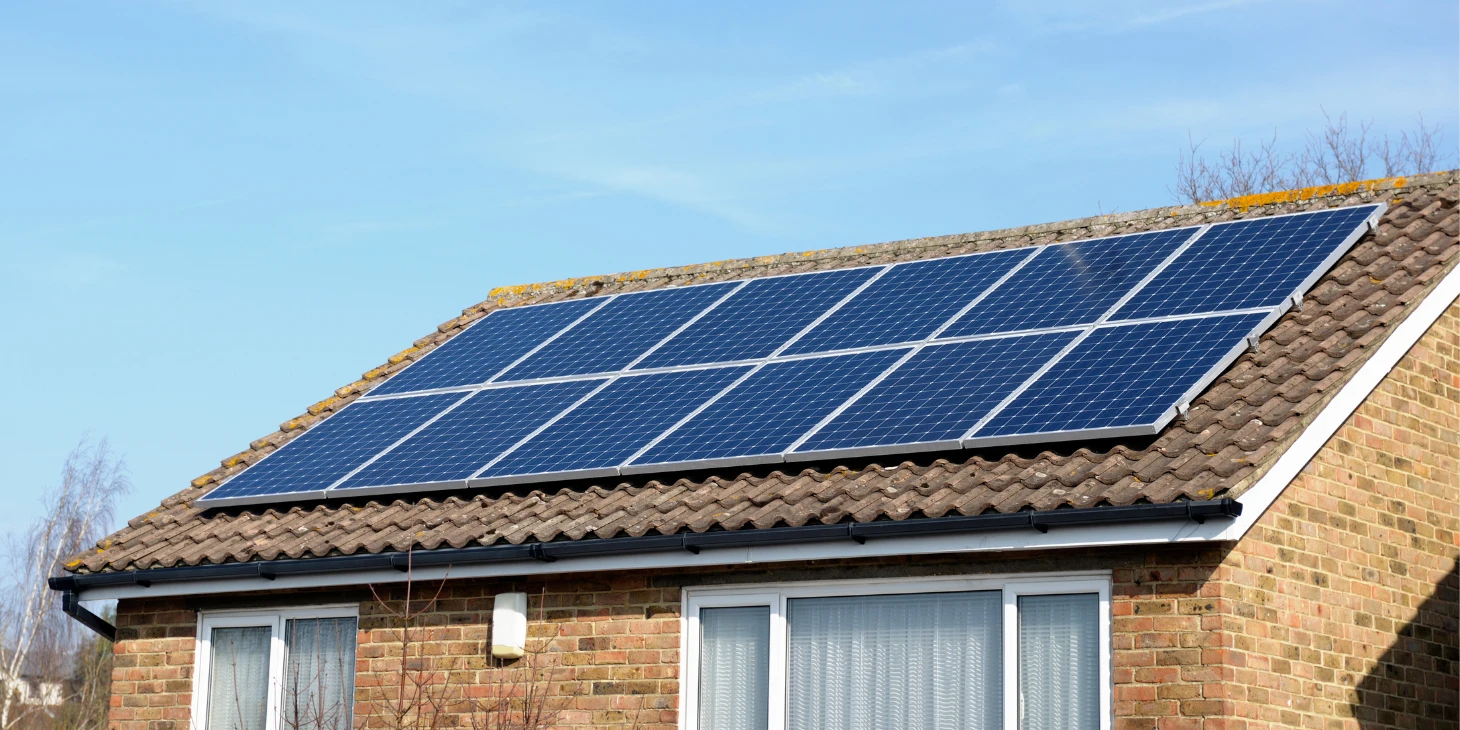
East and west-facing solar panels perform far better than most people expect. An east solar panel or west solar panel array typically generates around 80-85% of what an equivalent south-facing system would produce. A 4 kW system on an east or west roof in Leeds could produce around 3,000-3,300 kWh annually, more than enough to make a real dent in your electricity bills.
The real advantage is when they generate power. East-facing panels produce most of their electricity in the morning, perfect if you're running appliances before heading out for the day. West-facing panels generate their peak output in the late afternoon and early evening, exactly when many Leeds families return home and ramp up their electricity use.
Many Leeds homes have dual-pitch roofs with one face pointing roughly east and the other west. By splitting arrays across both orientations, you extend your solar production window and create a flatter power curve throughout the day. For areas like North Leeds or East Leeds, where housing includes plenty of semi-detached and terraced properties with east-west roof layouts, these orientations are absolutely viable.
North-Facing Solar: When (and When Not) It Makes Sense
North solar panels are the most challenging orientation in the UK. A north-facing system might only produce around 50-70% of what an identical south-facing array would generate in Leeds. That's a significant reduction, and it means you need to think carefully about whether it makes financial sense.
When north-facing makes sense: If your roof faces north-west or north-east rather than true north, you're already in better shape. Even a 30-45 degree deviation from due north means you'll catch some morning or evening sun during those long summer days. Shallow-pitched roofs also fare better when facing north. A roof angled at 15 degrees catches more overhead light than one at 45 degrees. If your South Leeds or West Leeds property has a low-pitch north roof, it might perform better than you'd expect.
When north-facing doesn't make sense: If your roof is steeply pitched and faces due north, the economics become questionable. You're looking at potentially 12-15 year payback periods, which starts pushing against the panels' expected lifespan. Heavy shading compounds the problem.
Other Factors That Matter as Much as Orientation
Shading is crucial. Even a south-facing roof will underperform if it's sitting in shadow for several hours a day. Trees, chimneys, neighboring buildings (anything that blocks sunlight during peak hours) can seriously reduce your generation. In built-up areas of Leeds like the City Centre, shading from surrounding structures is a real consideration.
Roof pitch influences how directly sunlight hits your panels. The ideal angle in Leeds is around 30-40 degrees, which conveniently matches many residential roof pitches.
Available roof space determines how many panels you can fit, which directly impacts your total generation potential.
Your energy usage patterns can determine which orientation works best. Pairing your system with battery storage can help bridge timing gaps.
What's Best for You? A Simple Decision Guide
If you have a south-facing roof with minimal shading: You'll get maximum generation, fastest payback (typically 7-9 years in Leeds), and the strongest long-term returns.
If you have east or west-facing roofs: Expect around 80-85% of south-facing output, which still delivers substantial savings. Choose east if you're high-usage in the mornings, west if you're home more in the evenings. Payback might extend to 9-11 years, but over a 25-year panel life, that's still a strong investment.
If you have multiple roof orientations: Use them. A combination system can maximize your total generation and spread production throughout the day.
If you only have a north-facing roof: Get a detailed assessment that models your specific roof's pitch, angle, and shading. If you're looking at 50-70% output, seriously consider alternatives like ground-mounted panels.
If you're unsure: Get a professional survey. AtSolar Panels Leeds, we'll assess your specific property and give you projected outputs for different configurations.
Government and Local Incentives
Installing solar panels in the UK has become more financially attractive thanks to government incentives that apply regardless of your panel orientation.
0% VAT on Solar Installations: The UK government currently charges no VAT on residential solar installations and batteries until at least March 2027. This tax break applies whether your system faces east, west, north or south, effectively making solar panels around 5% cheaper than they used to be when VAT was 5%. For a typical £6,000 system in Leeds, that's a £300 saving straight away.
Smart Export Guarantee (SEG): The SEG ensures you get paid for any surplus solar energy you export to the grid. All major energy suppliers must offer an export tariff, typically ranging from 4-15p per kWh. The payments are per kWh of electricity exported, so an east system might export more in late morning, a west system more in late afternoon, but the rate you get remains the same. This applies to all orientations equally.
Energy Company Obligation (ECO4): The ECO4 program can fund solar panels (up to 100% of cost) for low-income households or those receiving certain benefits, particularly if your home is electrically heated. These schemes are orientation-agnostic. If you qualify, it doesn't matter which way your roof faces. To find out if you're eligible, contact your energy supplier or local council.
Final Thoughts: So, What Is the Best Orientation?
South-facing panels generate the most electricity in Leeds and offer the fastest payback. But the best orientation is the one that actually exists on your property and can be designed properly. East and west-facing systems still deliver around 80-85% of south-facing output, which is substantial.
What matters more than hitting some theoretical ideal is making sure your system is well-designed for your roof's actual characteristics: pitch, available space, shading, and structural condition. With energy incentives and electricity prices where they are, even modest generation translates to meaningful savings. Lead the way with solar that's built to last and designed for your home.
Ready to find out what your roof can do? Get in touch for a no-obligation quote. Whether your roof faces south, east, west, or somewhere in between, we'll design a system that makes the most of what you've got. For more insights on solar energy, visit our blog or explore our maintenance and repair services to keep your system running at peak performance.
Solar Panel Direction FAQs
Do solar panels have to face south to work properly?
No. South-facing is optimal, but panels facing east or west still generate around 80-85% of the electricity a south-facing system would produce. Many Leeds homes have solar on east or west roofs and see excellent results.
How much less energy will I get from east or west-facing panels?
Roughly 15-20% less annual energy compared to an identical south-facing system. Where a south-facing 4 kW system might generate 3,700-3,800 kWh per year in Leeds, an east or west-facing one would produce around 3,000-3,300 kWh.
Can I install panels on a north-facing roof?
You can, but it's the least ideal orientation. North-facing panels might only generate 50-70% of what south-facing ones would produce. However, if your roof is north-west or north-east rather than true north, you'll catch some angled sun and perform better.
What if I can use multiple roof faces?
That's often excellent. Splitting panels between two orientations extends your generation window across more of the day and can increase total output by letting you fit more panels overall.
How important is roof pitch compared to orientation?
Roof pitch matters, but it's less critical than orientation and shading. The ideal tilt angle in Leeds is around 30-40 degrees, which conveniently matches many residential roofs.
What about panels on flat roofs?
Flat roofs are brilliant for solar because you're not limited by the building's orientation. We can use mounting frames to tilt panels south at an optimal angle, essentially creating an ideal setup regardless of your property's direction.
How do I know what'll work for my specific property?
Get a professional site survey. We'll assess your roof's orientation, pitch, shading patterns, structural condition, and available space, then run modeling software using Leeds climate data. Visit our homepage or contact us to arrange one.