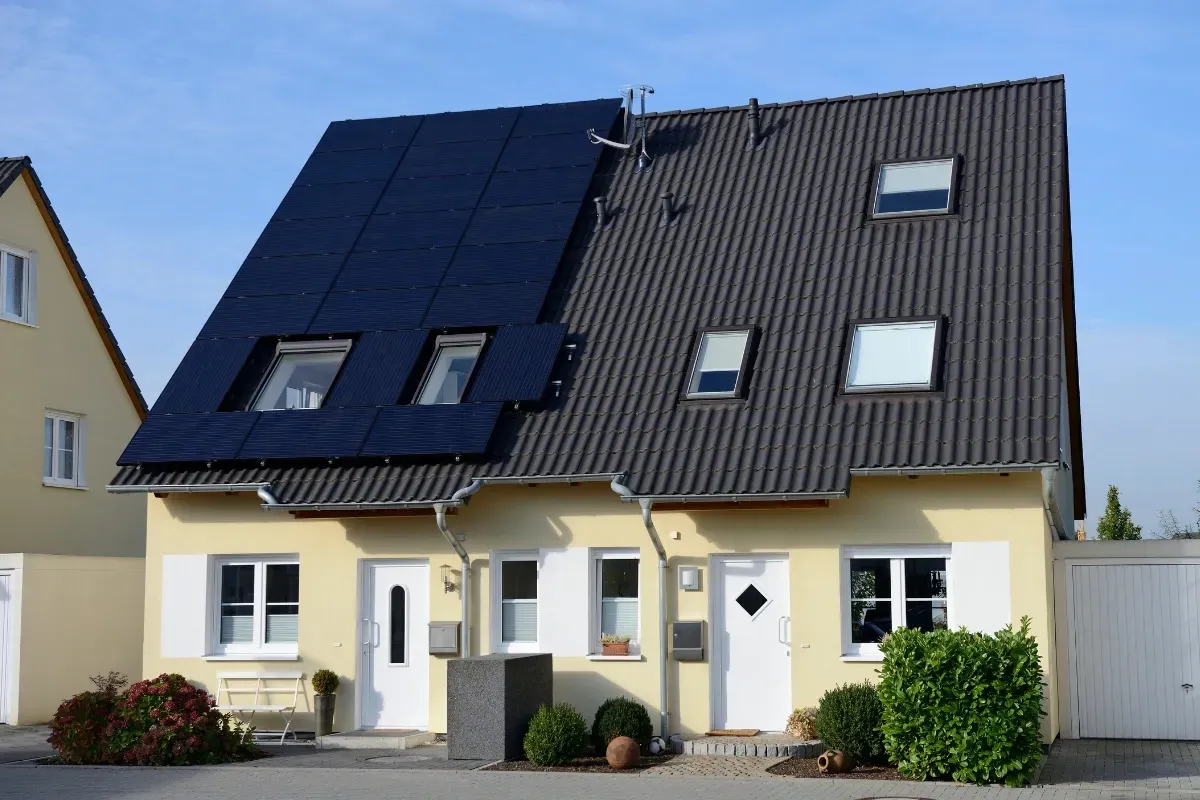
Can Semi-Detached Homes in Leeds Go Solar?
If you're a homeowner in a semi-detached property across Leeds and you've been wondering whether solar panels make sense for your home, here's the straightforward answer: they absolutely do. There's a common misconception that sharing a wall with your neighbour complicates solar installations, but semi-detached houses are actually well-suited for solar energy systems.
Quick take: Semi-detached properties in Leeds are excellent candidates for solar panels. You'll generally have sufficient roof area for a 3-4 kW system (roughly 8-10 panels), installation costs typically range from £5,000-£7,500, and you're looking at payback in around 10-12 years. The key factors? Managing shade from adjacent structures, considering your roof's direction, and keeping your neighbour in the loop. Most installations won't require planning permission either.
Table of Contents
What Sets Semi-Detached Properties Apart for Solar?
Is Your Semi-Detached Property Ready for Solar Panels?
Shared Walls, Neighbours, and Planning: What You Need to Know
Costs, Savings, and Payback for Semi-Detached Solar
Shading & Nearby Buildings: The Biggest Semi-Detached Solar Challenge
Common Mistakes to Avoid When Going Solar on a Semi-Detached House
What Sets Semi-Detached Properties Apart for Solar?
The defining feature of a semi-detached home is straightforward: one shared wall with the property next door. This brings some specific points to consider, but none of them are obstacles that prevent solar installations.
That shared boundary means your roofline sits alongside your neighbour's. The good news? Solar installations are carried out entirely on your side of the property line, and in most cases, any work near shared structures doesn't legally require your neighbour's consent (though keeping them informed is always sensible).
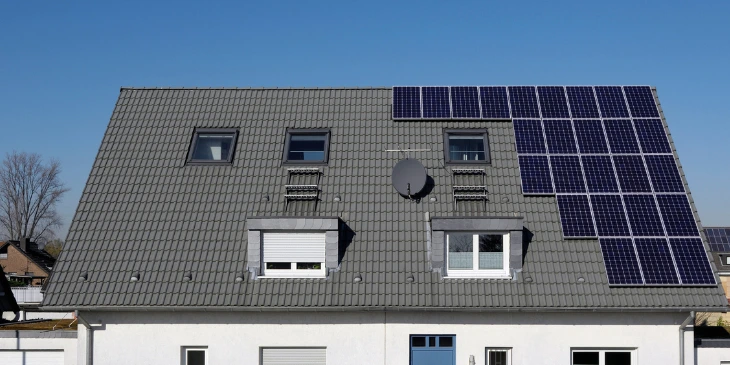
Here's where semi-detached homes shine: roof space. These properties typically feature pitched roofs with two generous surfaces, giving you plenty of room to install a system that matches your household's energy requirements. Solar panels work on virtually any roof material and structure you'll find across Leeds homes.
One consideration worth noting: being joined to another property means keeping an eye on potential shade sources from your neighbour's side. Perhaps they've added a loft conversion, or there's a chimney stack on the party wall. These elements might affect how much sunlight your panels receive, though today's solar technology handles partial shading far better than older systems.
The bottom line? That shared wall doesn't stop you from going solar. Semi-detached and detached properties both offer the roof space and installation flexibility that make solar panels a practical choice. You can even use a garage or rear extension roof if that suits your setup better.
Is Your Semi-Detached Property Ready for Solar Panels?
Most semi-detached homes across Leeds meet the requirements for successful solar installations. Here's what determines suitability:
Available Roof Space
Modern solar panels measure approximately 1.6-2.3 m² each. A standard residential system of 3-4 kW needs 6-12 panels, which translates to roughly 15-25 m² of roof coverage.
The encouraging reality: a typical three-bedroom semi-detached home in Leeds often provides around 70 m² of roof surface. That's more than enough space for a 3.5 kW system. Even if your roof feels compact, high-efficiency panels deliver more power per square metre, maximising what you've got.
Roof Orientation and Shading
Your roof's direction influences how much energy your panels generate. South-facing roofs are ideal, but east or west-facing installations perform brilliantly too, typically producing only about 15-20% less energy than south-facing arrays.
East-facing panels produce peak output during morning hours, whilst west-facing installations generate more power through the afternoon and evening. It's really only north-facing roofs that struggle to make solar worthwhile. If you've got a flat roof, installers can mount panels on angled brackets facing south.
Shading matters considerably. Shadows cast by nearby trees, neighbouring buildings, chimneys, or TV aerials will reduce your system's energy output. Ideally, the roof sections where panels will sit should receive unobstructed sunlight for most of the day.
When some shading can't be avoided, modern systems equipped with power optimisers or micro-inverters ensure that one partially shaded panel doesn't compromise the performance of your entire array.
Roof Shape, Age and Construction
Solar panels adapt to almost any roof type you'll find across Leeds: pitched slate, concrete tiles, metal sheeting, or flat felt roofing. What matters more is structural integrity and load-bearing capacity (panels weigh around 20 kg each). Most modern semi-detached homes handle this additional weight without any issues.
A roof pitch around 30-40° works particularly well in the UK, capturing sunlight effectively whilst allowing rainfall to keep panels naturally clean.
Since solar panels operate reliably for 25+ years, you'll want your roof in sound condition for the long haul. If your roof is quite old (more than 10-15 years since last replacement) or shows signs of damage, address those issues before installing solar. If you're planning a roof replacement within the next decade, it's worth doing that work first.
Shared Walls, Neighbours, and Planning: What You Need to Know
Permitted Development and Planning Permission
Throughout the UK, most residential solar panel installations fall under "permitted development," which means you typically won't need planning permission. As long as your installation meets basic requirements (panels don't protrude more than 20 cm from the roof plane, don't extend above the highest point), you can proceed without a formal planning application.
Your neighbours can't legally prevent your solar installation if it meets permitted development standards. You'd only need explicit planning permission in special circumstances (listed buildings or conservation areas). For most semi-detached homes across North Leeds or South Leeds, solar panels are permitted without planning approval.
Party Walls and Neighbours
Most solar installations involve work solely on your side of the roof and don't physically alter the party wall structure. A standard panel installation typically wouldn't trigger Party Wall Act requirements. However, if your installation requires work on a shared wall or involves mounting equipment to a shared chimney stack, you may need to formally notify your neighbour.
Some semi-detached homeowners in Leeds coordinate their installations with their attached neighbour. This can work brilliantly if both households are interested. Installing simultaneously could mean sharing scaffolding costs, which benefits everyone.
Even if your neighbour isn't planning to install solar panels, keeping them informed is good practice. Solar panels feature anti-reflective glass and create less glare than standard windows. As long as your panels don't overhang onto your neighbour's property, you're within your legal rights.
Costs, Savings, and Payback for Semi-Detached Solar
One of the first questions homeowners ask: what's the financial picture?
Upfront Costs
In Leeds, a typical residential solar installation is around 3.5 kW (approximately 10 panels). As of 2026, you're looking at roughly £6,000-£7,500 for professional installation. This assumes a straightforward installation on a pitched roof with reasonable access.
Costs vary based on system size and complexity. Adding battery storage will increase your investment by £5,000-£8,000. The encouraging news: domestic solar installations are zero-rated for VAT in the UK.
Savings and Payback
Solar panels start reducing your electricity bills from day one by cutting how much power you need to buy from the grid. Recent analysis suggests a typical solar installation in England pays for itself in roughly 10-12 years when you're consuming a significant portion of the energy you generate.
A 3-4 kW system in Leeds might generate around 3,000-3,500 kWh annually. If you use 70% of that energy directly and export the remaining 30%, your yearly savings could reach £600-£700 on electricity bills, plus perhaps £50-£100 from export payments through the Smart Export Guarantee.
What Changes the Numbers?
Several factors can accelerate or extend your payback timeline:
High self-consumption (working from home, daytime EV charging) improves solar economics
Location: Leeds receives decent solar irradiation, though southern regions might see 10-15% higher generation
Future energy pricing: rising electricity costs mean faster payback
Installation complexity: additional work like consumer unit upgrades might increase upfront costs
Even accounting for variables, solar panels on a semi-detached Leeds property represent a solid long-term investment with attractive annual returns.
Shading & Nearby Buildings: The Biggest Semi-Detached Solar Challenge
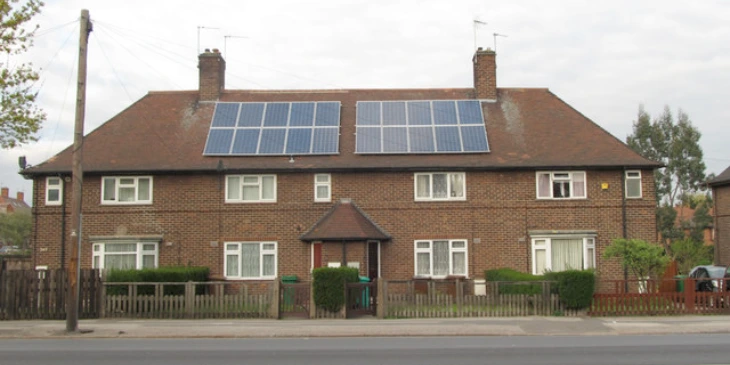
When it comes to solar performance, shading represents your primary challenge. Solar PV cells are remarkably sensitive to shadows. Research demonstrates that when just one cell on a panel sits in shade, that panel's output can drop by 50-80%. If one panel in a series string experiences heavy shading, it can reduce that entire string's generation to nearly zero.
For semi-detached properties in areas like East Leeds or West Leeds, common shade sources include a neighbour's two-storey extension, mature trees, shared chimney stacks, or the adjoining property itself if rooflines are offset.
Semi-detached homes often have one roof face that receives better sun exposure. Focus panels on the sunnier sections even if that means accepting a less-than-ideal orientation. If shading objects like overhanging branches can be trimmed or removed, that's worth considering.
When some shade is unavoidable, micro-inverters or power optimisers enable each panel to operate independently. With traditional string inverters, shade on a single panel could compromise the whole string's output, but panel-level optimisation means the shaded panel operates in isolation.
Most reputable installers across Leeds will recommend micro-inverters or optimisers if your site experiences partial shading patterns.
Common Mistakes to Avoid When Going Solar on a Semi-Detached House
Ignoring Your Roof's Condition
Don't jump into installation without properly assessing your roof's readiness. If your roof shows damage or features very old tiles, you might need to remove panels soon for repairs. Verify the roof structure is sound before panels go up. Also, plan your panel layout on the optimal roof surfaces, not just the most convenient installation spots.
Not Researching Local Permissions
Always understand what regulations apply to your specific property. This includes notifying your Distribution Network Operator (DNO) and confirming compliance with building regulations. Working with professionals from Solar Panels Leeds ensures these requirements are handled properly.
Overlooking Maintenance and Warranties
Understand your warranties thoroughly: panels typically carry 25-year performance warranties, whilst inverters usually offer 5-10 year coverage. Make sure you register manufacturer warranties correctly. Fortunately, solar maintenance requirements are minimal. Monitor your system's performance through the inverter's app or monitoring platform.
Final Thoughts on Solar for Semi-Detached Houses
Solar panels represent a smart investment for semi-detached homeowners throughout Leeds. Being attached to a neighbouring property isn't a barrier, it simply adds a few extra considerations like courtesy communication and thoughtful planning.
Semi-detached houses make up a substantial portion of homes right across Leeds, representing a brilliant opportunity for expanding residential solar energy adoption. When you address the key factors (suitable roof condition, minimal shading, neighbour coordination), there's no reason your semi-detached property can't deliver the same energy savings and environmental benefits as a detached home.
There's also a ripple effect: when one half of a semi-detached pair installs solar panels, it often sparks interest in the other half. By going solar, you might inspire your adjoining neighbour or others throughout Leeds to follow suit.
Solar on a semi-detached property in Leeds isn't just feasible, it's a forward-thinking upgrade that adds value to your home. The benefits are substantial: electricity savings over 25+ years, contributing to Leeds' cleaner energy future, and taking control of your household's energy supply.
Looking to explore solar options for your Leeds home? Get in touch to discuss how solar panels can work for your semi-detached property. The sun doesn't discriminate between detached and semi-detached homes, it shines on both equally.
Solar for Semi-Detached Houses FAQs
Do I need planning permission to install solar panels on a semi-detached house?
In most cases, formal planning permission isn't required. Solar panels qualify as permitted development provided certain conditions are met. Your neighbours generally can't legally object. Exceptions would apply if your Leeds property sits in a conservation area or is a listed building.
How many solar panels can I fit on a semi-detached house?
You can typically fit around 8 panels on the main roof section. If you have additional roof areas (like a rear extension or garage), you could accommodate more. A three-bedroom semi-detached home often has room for a 3-4 kW array (6-12 panels). The number should align with your energy requirements and budget.
How much do solar panels cost in Leeds, and what is the payback time?
A typical 3.5 kW system costs roughly £5,000-£6,500 in Leeds. This covers panels, inverter, installation, and benefits from 0% VAT. Payback time sits around 10-12 years. Given panels often last 25+ years, you'd enjoy over a decade of essentially free electricity after breaking even.
Does my roof need to face south for solar to be worthwhile?
Not at all. South-facing is optimal, but east or west-facing roofs perform very well, typically generating only about 15-20% less energy. North-facing roofs are the only orientation generally discouraged. Real-world performance shows that east and west-facing solar panels still produce roughly 80-85% of what an equivalent south-facing system would generate.
Will installing solar panels damage my roof?
When installed by qualified professionals, solar panels won't damage your roof. Roof damage from professional solar panel installation is extremely rare. Installers use specialised mounting brackets with appropriate waterproofing to prevent leaks. Reputable installers provide workmanship warranties (often 5-10 years) covering roof integrity. Choose an experienced, certified installer like the team at Solar Panels Leeds.
Should I replace my roof before installing solar panels?
If your roof is over 15-20 years old or you've noticed leaks or missing tiles, handle the roof refurbishment first. You don't want to remove panels in five years to replace a failing roof. If your roof is relatively young (under 10 years old) and in good condition, there's no need to replace it beforehand.
What if part of my roof is shaded?
You can still install solar panels, but you'll need to manage the shading strategically. Your installer can position panels to avoid the worst shaded areas and use micro-inverters or power optimisers so that one shaded panel's reduced output won't affect the others. If the shade source is a tree on your property, you can trim it. Consider adding battery storage to maximise use of solar energy generated during peak sunlight hours.