How to Check Solar Performance in Leeds
Most Leeds homeowners and businesses get their panels fitted and then move on, forgetting what's powering them. The system sits on the roof, the bills come down a bit, and that feels like enough. But if you're not keeping an eye on a few key numbers, you could be leaving real savings on the table, or quietly missing a fault that's been eating into your output for months. The good news? Tracking solar performance is far simpler than most people think.
Quick take: The most useful solar performance checkers for Leeds properties, from kWh output and performance ratio to ROI and uptime. What each one tells you, why it matters, and how to stay on top of it without it taking over your life.
Table of Contents
Why Tracking Solar Performance Matters in Leeds
The Core Solar Performance Checkers to Start With
Measuring kWh Output and Performance Ratio
Understanding Savings, ROI, and Payback
System Efficiency, Uptime, and What to Do When Numbers Drop
Keeping Performance Tracking Simple and Actionable
Why Tracking Solar Performance Matters in Leeds
Whether you're a homeowner in Headingley with panels on a Victorian terrace or a business running a commercial site in Hunslet, knowing how your system is performing puts you in control. Solar without monitoring is a bit like running a business without checking the accounts. You won't know there's a problem until it's already cost you.
For Leeds businesses, this ties directly to the bottom line. Energy use, peak demand, and cost per kWh are all measurable once you have the right data in front of you. Installers who share performance figures openly are also better placed to build long-term trust with their customers.
For Leeds homeowners in areas like Roundhay or Morley, the same logic applies. Even a quick monthly check can tell you whether your system is doing what it promised.
Good KPI (Key Performance Indicator) tracking helps you across the board. KPIs are simply the small set of numbers that tell you whether something is working as it should. In practical terms, that means:
Catching faults before they cause a noticeable drop in output
Confirming that your savings line up with what was projected
Backing up Smart Export Guarantee (SEG) claims with solid export data
Showing sustainability credentials to customers, stakeholders, or tenants
The Core Solar Performance Checkers to Start With
Not every metric needs the same level of attention. If you're new to tracking, these are the ones worth focusing on first:
Energy Generated (kWh) is the starting point. Your daily, monthly, and annual output tells you whether the system is producing what it should for Leeds' climate. Check it against your installer's original projections and you'll quickly see if something's off.
Normalised Yield (kWh/kWp) scales output to system size, so you can compare your numbers against UK averages fairly. Most UK systems produce around 800–1,100 kWh per kWp per year. A 4 kWp system in Leeds should be hitting roughly 3,200–4,400 kWh annually. Consistently falling short of that range is worth looking into.
Performance Ratio (PR) is the metric that ties it all together. It compares your actual kWh output against the theoretical output based on available sunlight. A well-maintained UK system sits at 75–85% PR. If yours drops below 70%, that's a clear signal of shading, soiling, or a component that needs attention.
Uptime and Availability is simply the percentage of daylight hours your inverter is running. The standard target is above 95%. Any regular downtime is directly cutting your generation.
Self-consumption and Export are especially relevant if you've paired your system with solar battery storage. Self-consumption ratio shows how much of your generated energy you're using on-site; exported kWh feeds into your SEG payments. Both are worth logging monthly.
Financial KPIs complete the picture. ROI, payback period, and net savings show whether the investment is delivering. For Leeds businesses, payback typically runs 4–6 years; for residential customers, it's usually 7–12 years.
Measuring kWh Output and Performance Ratio
Production metrics are where most people begin, and they're the easiest to track. Modern inverters log generation hourly, daily, and monthly without any input from you. Output data shows a 4 kWp system in southern England generating 3,600–4,400 kWh per year, with 10–12 kWh on a clear summer day. Leeds sits further north, so yields run around 800–1,000 kWh per kWp annually. That said, a well-positioned, unshaded system on a south-facing roof in Chapel Allerton or Horsforth should still produce solidly throughout the year.
Performance ratio is the metric that gives those kWh figures real context. PR captures the full picture of real-world losses: shading from nearby rooftops, dust or debris on panels, inverter inefficiency, and the natural drop in output on very hot days. It's calculated as actual output divided by expected output based on irradiance. Industry figures place a well-run UK system at 75–85% PR, with research across PV systems pointing to an average of around 78.6%.
For Leeds properties with older rooflines, particularly the Victorian terraces and back-to-back housing common in Kirkstall, Holbeck, or Meanwood, chimneys and neighbouring structures can gradually reduce kWh output without it being obvious. Watching your PR over time is the best way to spot this before it becomes a real problem.
Understanding Savings, ROI, and Payback
The numbers that tend to matter most are annual bill savings, ROI, internal rate of return (IRR), and payback period. For Leeds businesses with large systems and strong daytime electricity use, payback often lands in the 4–6 year range, with annual ROI reaching 14–20%. For Leeds homeowners, whether that's a family home in Seacroft or a terrace in Beeston, the payback window is typically 7–12 years, but the savings build steadily over a 25-year panel lifespan.
ROI isn't a set-and-forget calculation. Keeping tabs on it over time means you'll catch any decline in returns early and act, whether that's booking a maintenance visit or tweaking when you run high-demand appliances during peak generation hours.
Export income is worth paying close attention to as well. The Smart Export Guarantee means your energy supplier pays you for every kWh you send back to the grid. Logging exported kWh through your inverter or smart meter lets you verify those payments and look for ways to shift usage on-site. If your export figures are consistently high, pairing your system with battery storage could meaningfully improve your overall returns.
For a tailored view of what your system should be delivering, the team at Solar Panels Leeds can help you benchmark against realistic local projections.
System Efficiency, Uptime, and What to Do When Numbers Drop
A stable performance ratio in the 75–85% range is a healthy sign. When PR starts sliding, that's the system telling you something needs looking at, whether it's a build-up of grime, new shading from a growing tree, or an inverter that's starting to struggle. Leeds gets a fair amount of overcast, wet weather, and that can accelerate panel soiling, especially if your system hasn't had a professional clean in a while.
Availability is calculated as operational hours divided by total daylight hours. Anything consistently above 95% is where you want to be. An inverter that keeps dropping offline is quietly costing you kWh every time it does.
For commercial systems or multi-array setups in West Leeds or East Leeds, logging fault counts gives your maintenance provider a clearer picture of system reliability over time and makes it easier to spot patterns rather than treating every fault as a one-off.
Most modern inverters from brands like SolarEdge, Enphase, and GivEnergy handle the data collection for you. Their apps and web portals log generation, PR, battery state, and error codes automatically, and they can send you alerts if anything falls outside the normal range. The data is already being gathered. The key is actually looking at it.
Keeping Performance Tracking Simple and Actionable
The biggest mistake with performance monitoring is overcomplicating it. You don't need to be in spreadsheets every week. You just need to know quickly when something needs attention.
Your inverter app is the starting point. It handles output, PR, and battery levels without you having to do anything. Set up error alerts from the start so any dip in performance notifies you immediately rather than going unnoticed for weeks.
A simple monthly check on top of that goes a long way. Record your total generated and exported kWh, note your current PR, and compare output against your installer's estimate for that month. For a Loiner with panels on a back-to-back in Hyde Park or a semi in Roundhay, this takes around ten minutes and can catch a slow decline before it turns into something more costly.
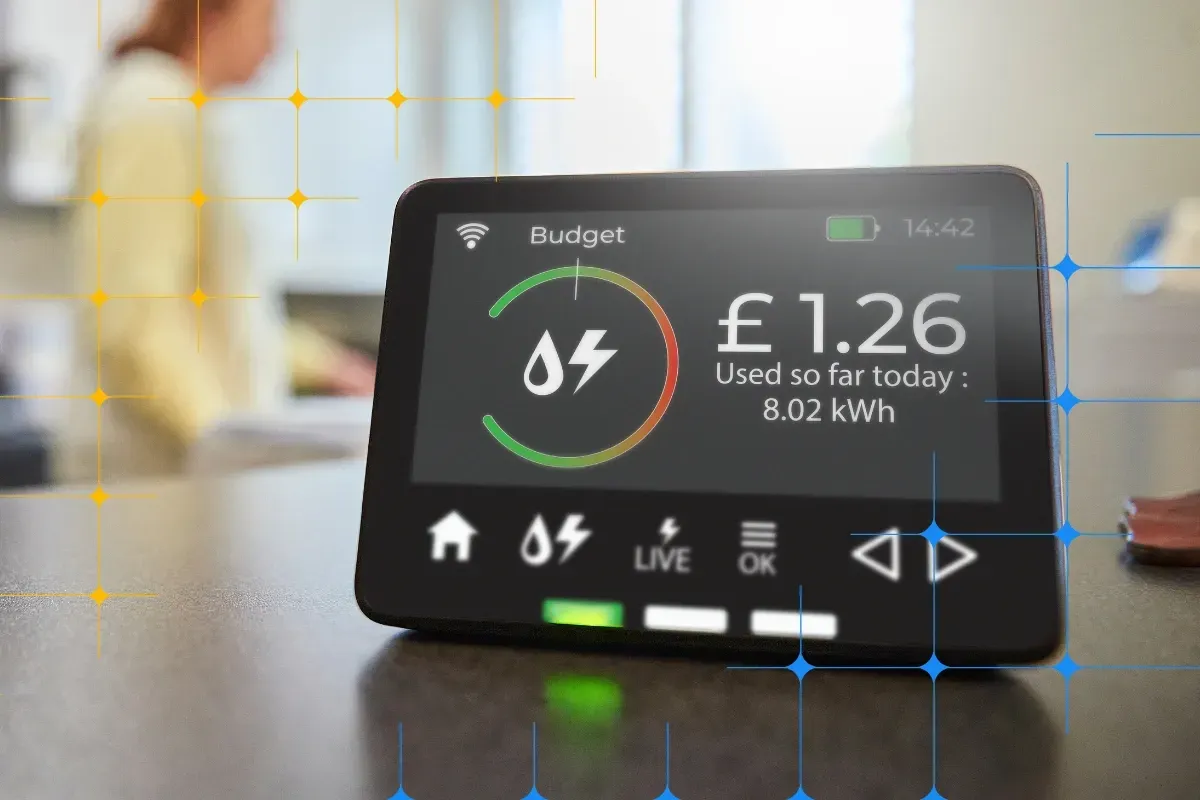
Your smart meter or in-home display adds another layer, giving you real-time import and export figures alongside what you're generating.
For commercial sites across Leeds, a quarterly review with your installer or operations provider is worth putting in the diary. Cover kWh trends, PR history, financial returns, and any fault events. That structured conversation turns raw data into something you can actually act on.
If you want to know more about what your system should be producing, or you'd like a professional performance review, get in touch with the team or visit our solar blog for more guidance.
Final Thoughts on Solar Performance Checkers
Keeping tabs on your solar output in Leeds doesn't need specialist software or a technical background. A focused set of KPIs covering kWh output, performance ratio, uptime, and financial returns gives you everything you need to know whether your system is doing its job.
The data is already sitting in your inverter app or smart meter. Building a habit of checking it regularly is what separates systems that quietly underperform for years from ones that consistently deliver. Loiners who monitor their systems catch problems earlier and lead the way on energy independence.
Whether your panels are newly installed or have been running for a few years on a rooftop in North Leeds or South Leeds, the principle doesn't change: watch what matters, and act on what you find.

Solar Performance Checkers FAQs
What should my Leeds solar system produce?
A typical Leeds home system generates around 800–1,000 kWh per kWp per year. A common 4 kWp installation will often produce 3,200–4,000 kWh annually, with around 10–12 kWh on a bright summer day and noticeably less in winter. These figures are your baseline for spotting whether performance is where it should be.
What is a good Performance Ratio for a Leeds system?
Performance ratio compares actual kWh output against expected output, accounting for available sunlight and temperature. A PR of 75–85% is a solid result for a Leeds system. If yours is consistently sitting below 70%, it's likely pointing to panel soiling, shading from a neighbouring building or chimney, or a fault worth investigating. A downward trend over several months is a good reason to arrange a maintenance check.
How long until my solar panels pay for themselves?
It depends on your system size, daytime electricity use, and whether you're residential or commercial. Leeds businesses with large setups typically see payback in 4–6 years, with annual ROI of 14–20%. Homeowners usually land in the 7–12 year range, with ROI around 8–15%. Comparing your monthly bill savings against your original installation cost will show you where you stand.
How can I track my solar performance without making it complicated?
Start with your inverter's monitoring app. Most come with a free app or web portal showing real-time kWh output, performance ratio, battery levels, and error alerts. Add your smart meter or in-home display for import and export data. A brief monthly log of generated kWh, exported kWh, and current PR gives you a running picture over time and helps you spot trends before they become faults.
What about the Smart Export Guarantee?
Under the SEG, your energy supplier pays you for every kWh you export to the grid. Keeping a record of exported kWh through your inverter app or smart meter lets you cross-check payments and confirm you're being paid correctly. Tracking export patterns also helps you decide whether to shift appliance use so more of what you generate stays on-site.
How do I know if something is wrong with my system?
The clearest signs are a sudden fall in daily kWh output, a sustained drop in performance ratio, or a persistent inverter error code. If output on clear days is well below your installer's estimate, or PR has been declining for several weeks without an obvious reason, it's time to take a closer look. Check for new sources of shading, dirty panels, or any loose connections. If nothing obvious stands out, contact the team or book in with a qualified maintenance provider.